
Warning: Trying to access array offset on value of type bool in /home3/rainonro/public_html/wp-content/plugins/wp-word-count/public/class-wpwc-public.php on line 123
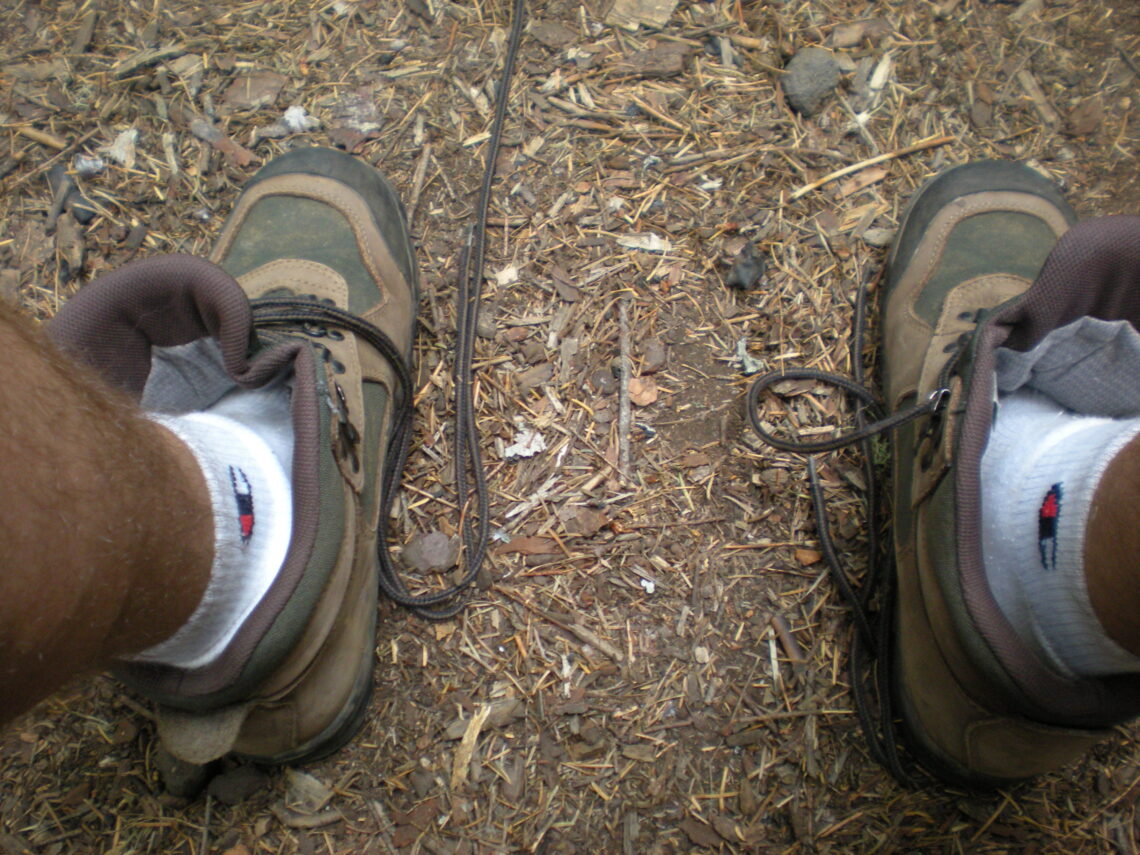
In the summer of 1986 my family took me to the airport with a bike and a couple suitcases. I was headed off to college and this was the big goodbye. As my flight taxied to the runway I could see my family all waving back from the gate (yes, those days we could all go to the gate!). A few minutes later my seat-mate struck up a conversation and asked me what I was up to and where I was going. I recall not knowing how to answer. I wasn’t in high school, but hadn’t started college yet. I wasn’t at home, but wasn’t on campus yet. I was on my own, but really didn’t know what that meant. Everything was up in the air (so to speak). Later I learned I was in the midst of a seriously liminal moment.
What is Liminality?
First, some fun etymology (BTW “fun” and “etymology”…two words that have probably never appeared in the same sentence ever). Liminal comes from the Latin word “Limins” – a passageway between two spaces. The limins is a threshold, that part of the door found on the floor where one steps from one room into another. It was most likely the dividing point between the room where a household threshed grain and the next-door room. Of course metaphorically a “threshold” is a moment of transition from one thing or time to another. In anthropology, the idea of liminality reveals unique moments of human life and community. Arnold van Gennep (Le Rites de Passage. 1909) developed this concept in connection to his writing about momentous changes in our lives. You know, all the rituals that mark high school graduation, adulthood, marriage, death and others. My post-high-school pre-college flight was a liminal time.
But not all liminal moments are connected with developmental Rites of Passage and one can begin to see how it also might explain lots of other transformations that occur around us all the time. Victor Turner (Dramas, Fields, and Metaphors: Symbolic Action in Human Society, 1974) extended Van Gennep’s concepts to cultural and political change by noting how liminal periods can exist in all sorts of times and places. One can be elected President of the United States but need to wait several liminal months before taking the oath of office. Traveling by train or plane can become liminal times as one is neither here nor there but somewhere in between.
Writers have applied liminal concepts to all sorts of experiences. From the novelist’s struggle with the middle portion of a book where a plot point has been instigated but the protagonist has yet to respond, to the personal journey through a period of grief and uncertainty accompanying the death of a spouse. Despite some arguing that rites of passage have become particularly scarce in post-industrial Western society, liminality and this time of in-betweenness can become a powerful way to think about many moments of our lives.

So what happens during liminal days?
Some liminal moments are deeply personal and shake us to our very foundation (like getting married or the death of a spouse), others are significant but might be limited to a set period of time or not push quite as deeply into our lives (waiting to hear back from a job interview or moving from one apartment to another), and yet others might barely register above our daily routines (driving to work or waiting to get the WiFi hooked up at home). During the more intense manifestations, Liminality is characterized by a sense that:
- Our assumed future plans have suddenly been thrown into doubt (like when we lose our job and wonder what is going to happen next)
- The normal authorities in our lives don’t hold the same power over us that they used to (like the way we look differently at our kindergarten teacher once we move-on)
- Traditions and established orders become fluid and malleable (say when we leave home and suddenly discover we can drink as much Mountain Dew as we want without our parents getting on us about it!)
- Our identity is shifting both for ourselves and others (as in when we wear a wedding band in public thereby witnessing to new rules regarding our relationships)
These personal and social shifts can set off a whole series of quakes up and down the fault-lines of our lives. Some are anticipated and full of joy (graduation) while others can be impossible to predict and leave us broken and lost (the death of a loved one). Often, even “positive” liminal moments can create unclarity about plans for our lives, confusion about our values and priorities, a jostling of our relationships with old friends, and create a sense that we’ve lost control.
These times are often uncomfortable and scary. Turner observed that liminal moments are extremely intense and the lack of routine, disappearance of expectations, and shifting relationships typically cannot be sustained for long. These unique times can push people into new identities and relationships with those around them and often become the compost out of which new growth, commitments, identities, relationships, and institutions are born.
Liminality is a simultaneously confusing and energizing state. A time of transformation. An opportunity to shed old identities and take on new ones.
This paradox is not lost on spiritual leaders. Think of the Hebrew people’s 40 years of wandering in the desert, the Buddah’s 49 days under the bodhi tree, Jesus’s 40 days in the wilderness, and the time spent in the jungle by young male Bassari tribe initiates as part of their rite of passage to adulthood. Uncomfortable and unpredictable spaces are frequently understood as essential for growth. Terrifying or uncomfortable as it may be, recognizing that we are moving through liminal moments gives us some control during what seem like uncontrollable times, and make good use of these waves of change. “Thinking liminally” allows us to more thoughtfully move through life as people wanting to bring a bit more hope into the world.
How do you know you’ve entered a liminal space?
A good place to begin is to watch for endings and beginnings. Liminal times often come upon us through changes in personal relationships, work, careers, family, geography, even cultural and political moments (think about how WWII or the coronavirus has thrown the whole planet into an in-between space!). All of these mark significant shifts. A move across the country to follow a partner’s work. Graduation from college and the move into a career. Watch too for the stuff that previously made sense to you, but doesn’t anymore. Work that felt like a good fit, suddenly doesn’t feel like a good fit. Hobbies don’t satisfy the way they used to. Rhythms that used to feel normal, don’t feel normal anymore.

Liminality and Personal Transformation
How do we make our way through liminal times? Though different people do this in different ways, the following 5 suggestions are a good place to begin…
- Recognize that something different is going on and that you’re not going crazy – liminal moments, when things seem to be swirling out of place around or inside – are not only not wrong, but it might be exactly what needs to be happening to you or to our world right now. What new things could be coming to life under the surface of what might seem like total chaos?
- Gear down – Some years (decades!?) ago I cycled with a group from Flagstaff, Arizona to Yellowstone Park in Wyoming. Cutting back and forth across the continental divide meant lots of hills. Contrary to my instincts, far more seasoned teammates would shout back “time to spin!” In cycling parlance this meant that we should drop into a low gear and peddle more quickly but with much less pressure. Sure we were only creeping along, but now was the time to steward our muscles, not break speed records. If we wanted to move forward, go slow.
- Check with others. This is a perfect moment to check-in with those you are close to and see if they are seeing what you are seeing. When life seems like it’s running off the tracks, you’re usually not in the best position to understand what is going on. Some outside perspective lets you confirm what’s really up. For a more intentional focus, this might be a great time to begin meeting with a therapist.
- Return to old loves – Reinvest in some old playfulness or hobbies. James Hollis (The Middle Passage, 1994) tells the story of how renowned psychologist Carl Jung would build sandcastles and play with toys on the beach as he moved through his midlife transitions. This comforting playfulness creates space inside for us to non-anxiously explore this new time.
- Discern rather than Demand – Suspecting that something new is coming to life in or around us, it is tempting to quickly turn toward action (remember how Turner talked about how hard it is to remain in liminal moments?). My own experience with this has come through imagining myself approaching a wall and feeling an overwhelming urge to hammer a passage through it. As the years have gone on, I’ve worked to reimagine reaching this wall and gently feeling for the edges of a hidden door I have overlooked in my panicked zeal. Sometimes expecting that the next step is already present reveals surprises we would not have otherwise seen.
Liminality, Social Justice & Society
Most conversations about Rites of Passage and liminality stop here. They focus on individual transformation that comes when someone becomes part of a faith community or graduates from school. I think we often forget the necessary social component from which liminal opportunities grow. This additional perspective allows us to understand the social power of what is typically relegated to an exclusively personal experience. Here is the liminal intersection where spirituality and social justice meet.
A rich understanding of transformative liminal experiences reveals that spiritual transformation is incomplete without social engagement.
The social power of liminal transformation is evident in two ways. First, notice that personal transformation is only possible in the midst of community. Without a community, there is no temple to become part of. Without an educational system, graduation makes no sense. Absent some social body, cultural community, neighborhood, village, or nation, rituals of transformation are meaningless. Second, transformative growth is affirmed only with a greater degree of responsibility toward the community. Rituals acknowledging the crossing of a child into young-adulthood is necessarily accompanied by the community-driven expectation of greater maturity and responsibility. Without new challenges and roles, a person may grow older in years, but remain stuck in a former, less-mature identity.
Donning my sociologist hat, I wonder how liminal moments might draw us more deeply into civic engagement and social justice. Rather than limiting liminal moments to personal spiritual growth, the challenge to engage social justice offers deeper transformation. What might this look like?…here are 5 more hints:
- Remember that liminal moments are more than just personal spiritual awakenings. Liminal transformations are incomplete without new ways of relating to our community. If you feel a lingering sense of unfinished liminal business, perhaps it is the need to re-engage with your neighbors or social life in new ways?
- Recognize when others are going through uncomfortable, liminal times. If someone close to you seems to be out of sorts, or shares a challenging struggle, consider that it might not just be a “problem” to solve, but an opportunity for growth and transformation that you can help them explore. At the very least, don’t just brush them off as having a bad day. This is your opportunity to walk with another through a powerful time.
- Identify – one of most empowering and powerful forces for social change is to simply say who you are and the causes you believe in. Yard signs, bumper stickers, tweets, shares, or wearing a pin on your jacket might not feel like a way to change the world, but can require great courage (only available to those who are growing in confidence and care). Remember too that these small actions speak powerfully to others who might also want to identify themselves, but fear being the only one.
- Take “the other” to lunch – This one is inspired by Elizabeth Lesser who has a great TED talk that challenges us to engage in conversations with those at the periphery of our world (https://www.ted.com/talks/elizabeth_lesser_take_the_other_to_lunch?language=en#t-10856). While Lesser focuses primarily on those who are in a different political place than we are, one can extend this to people in our office who we have never talked with, neighbors who we wave at but haven’t really met, and acquaintances of different racial or ethnic backgrounds. Entering the conversation with a few ground-rules and the intention of listening and learning rather than educating or converting is vital. You will probably be amazed at the power of these conversations.
- Follow your skills, not your shoulds, which is to say, don’t necessarily yield to the pressure of what you think you should be doing. For example, amidst a #MeToo rally, I was talking with a very introverted friend who hates crowds but is very passionate about the movement. Rather than caving to the sense that they should be out on the street, my friend spent days tweeting, sharing, and communicating plans for the march with their friends and classmates. Following their skills (online social media communication) was much more joyful for my friend and valuable for the movement than a sense that the only way to participate was to be out on the street marching.
This investment in our liminal experiences is particularly important in this time of climate change, the coronavirus, the global call for police reform, and a renewed focus on racial justice. A rich understanding of transformative liminal experiences reveals that we may be experiencing a powerful powerful moment of social change. It also reminds us that spiritual transformation is incomplete without social engagement. Today’s transformative turmoil becomes both a good time to seek solace for your soul AND become part of building a better new world.
When you sense change coming, don’t just relegate it to a change in your meditation routine. Yes, meditate, journal, walk, and make dedicated use of the spiritual tools you find helpful. And…allow these transformations to percolate into relationships with friends, family and strangers around you.
rainonrocks.com explores the connection between spirituality and social justice and inspires readers to reach deep and get involved. Matt Friesen blogs about spiritual meanderings, career confusion, and wandering voices who think it’s worth trying to make a difference. Subscribe, share with your friends, and suggest topics or people you’d like to get to know.